




































 Sherry Jones Olney
Winter temperatures have a way of slipping quietly into dangerous territory. While most of the community sleeps—homes warm, blankets pulled close—a life-saving effort is already taking shape in Fort Walton Beach.
Cold does not arrive suddenly. It settles in slowly, numbing fingers, stealing warmth one hour at a time. Turning long nights into something dangerous. For individuals living outside, a single winter evening can mean far more than discomfort. It can mean survival.
That reality is why Cold Night exists.
A Decision That Saves Lives
Before sunrise, Donna Morgan, Director of Homeless Services and Housing at One Hopeful Place, stands inside the Cold Night shelter, surveying rows of neatly prepared bunks. The beds are empty for now—blankets folded, the room quiet—but she knows what they represent. By nightfall, each one could hold someone who would otherwise be facing freezing temperatures with nowhere to go.
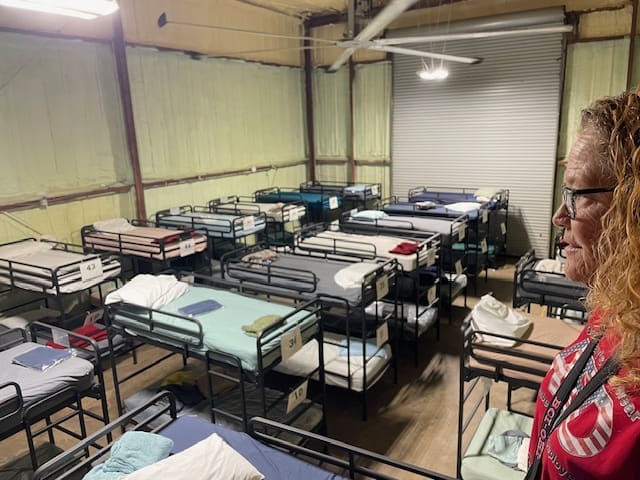
Morgan is the person who activates Cold Night on behalf of One Hopeful Place. She monitors weather conditions closely and makes the call when temperatures fall into life-threatening territory. “These are life-safety decisions,” Morgan said. “Cold Night requires experience, constant vigilance, and coordination across multiple partners. When temperatures drop, our focus is immediate and unwavering—making sure every person who needs shelter has a safe, warm place to go.”
Cold Night is a seasonal emergency shelter operation of One Hopeful Place, activated when overnight temperatures are projected to fall below 40 degrees. When triggered, it opens 48 additional emergency shelter beds, supplementing the 50 beds for men and 17 beds for women already on campus.
Preparing the Shelter
Behind the scenes, the work of Cold Night begins hours earlier. Weather forecasts are monitored as early as 3:00 a.m., and by 9:00 a.m., if Cold Night is confirmed, a coordinated response is set in motion.
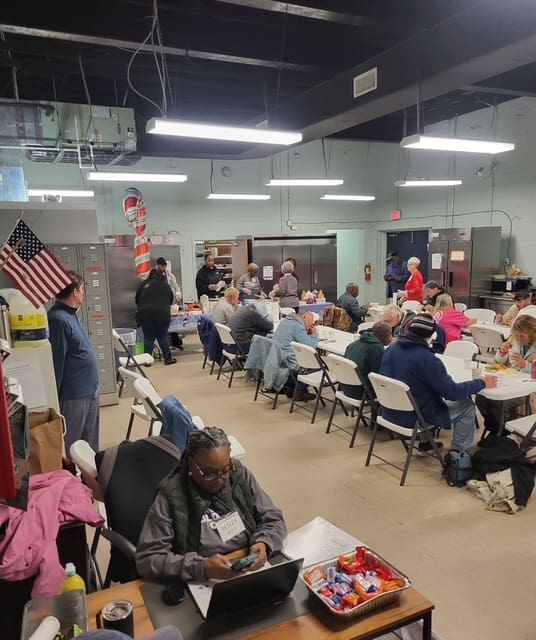
Notifications are sent through the Cold Night system and social media. Transportation routes and pickup locations are confirmed. Community partners—including Bridgeway Center—work together to ensure continuity of care and safe transport for those seeking shelter.
By early afternoon, the One Hopeful Place campus begins to change.
Heat is turned on inside the Cold Night building. Tables are repositioned. Supplies are staged. Every movement is deliberate—because when temperatures drop, details matter.
Arrival and Welcome
As participants begin arriving, they are signed in, assigned a bunk, and offered the opportunity to shower. During this time, One Hopeful Place residents help serve hot coffee—one of the most requested comforts on cold nights. Hands that were numb from the cold slowly begin to warm around paper cups.
Transportation plays a vital role. Buses run from Shell Avenue, with additional assistance from community partners to ensure no one is left behind as daylight fades.
Dignity at the Table
As evening settles in, a line forms for dinner. Men stand quietly, some holding backpacks that contain everything they own. Others wait with empty hands, shoulders hunched—not from shame, but from exhaustion and the cold that has followed them all day.
Before the meal is served, grace is said. For a brief moment, the room grows still. Gratitude is spoken. Dignity is honored. Then dinner is served.
After Dinner: Rest and Refuge
Liz Qualiana, Shelter Coordinator at One Hopeful Place, witnesses these moments night after night. In an interview for this article, she described the immediate shift she sees once guests are inside. “You can see the relief almost immediately,” Qualiana said. “Cold Night isn’t just about a bed or a meal. It’s about dignity. It’s about making sure people feel safe, seen, and respected.”
After dinner, guests move into the Cold Night shelter and settle into their bunks. Staff remain on site throughout the night, ensuring safety, supervision, and support. Clean socks, warm bedding, and a secure environment offer something many participants haven’t experienced in a long time:
Peace. One participant described it simply: “One Hopeful Place gave me a night of peace. That may not sound like much, but when you’ve been living outside, it means everything.”
The Morning After
Morning arrives gently. Breakfast bags—prepared the night before—are placed at the end of each bed. Juice, fruit, a muffin, and a snack provide nourishment before the day begins again.
Transportation returns participants to Shell Avenue, where staff and volunteers take time to listen, offer encouragement, and connect individuals with additional resources.
When the System Is Tested
Last winter, during a severe cold spell many now refer to as “Snowmageddon,” Cold Night was activated for seven consecutive nights.
Roads were impassable. Power outages left homes without heat. Some who arrived were not chronically homeless—but individuals and families who suddenly had nowhere warm to go.
For staff and volunteers, those seven nights required relentless effort. Beds were cleaned and reset day after day. Meals were prepared and served without pause. Exhaustion set in—but the doors never closed.
Each night, the shelter remained open. Each night, beds were filled.
And each night, everyone who came through the doors was fed, warm, and safe.
The Broader Impact
Cold Night is part of a broader continuum of care at One Hopeful Place. Since 2020, the organization has sheltered 607 individuals, helped 204 people transition into permanent housing, and ensured 53 veterans found safety and support.
During last winter alone, Cold Night provided 1,111 life-saving overnight stays, while the Well-Being Day Program served 2,897 individuals with meals, showers, and basic necessities.

Compassion That Rises
Yet Cold Night is not powered by systems alone. It is sustained by people—those who show up when the temperature drops and the need is greatest. Their stories—the ones behind the meals, the coffee, the prayers, and the long nights—will be shared next.
Because when winter tightens its grip, compassion does not retreat. It rises.