

















By Michelle Ruschman
Ham radio is an intergenerational hobby for men and women, and people can get started with varying levels of ability and interest. DJ Stewart, call sign KI4ZER, is president of both the Playground Amateur Radio Club (PARC) and the North Okaloosa Amateur Radio Club (NOARC). He has fond memories of getting started in ham radio in early childhood.
“My father and grandfather were both hams in Wisconsin. When we moved to St. Peters, my dad started the St. Peter’s Emergency Operations Center. They had no emergency resources at the time and were dependent on St. Louis, Missouri, which was 35 miles east. Since few resources were allocated to people outside the city, the response times were slow. The center became a very robust program as they helped people during times our community faced tornadoes, fires, floods, and even tremors. Watching my dad help our town through those efforts taught me a lot.

From there, we started working with local governments and local police. Other hams got involved, and that experience led to a love affair with electronic equipment and communications of all types.”
In the early 19th century, the term “ham” radio distinguished amateurs from professional operators. It stemmed from “ham-fisted,” an old wired-telegraph slang term describing clumsy Morse code operators. It has evolved into a term signifying the fellowship of those interested in a communication style that endures through the digital age.


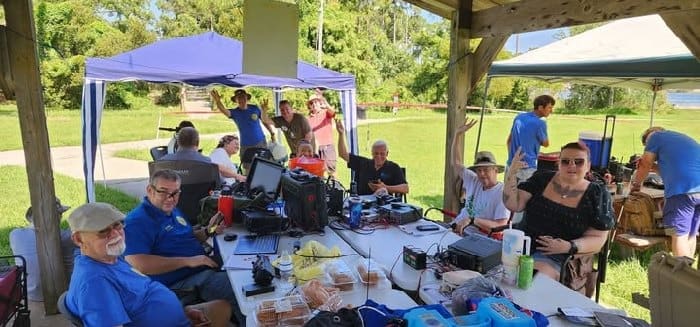
“Our clubs are where every walk of life comes together – men and women of varying occupations, veterans and civilians, seasoned operators and people who are brand new to amateur radio. What we have in common is our desire to understand this hobby. We help each other get to whatever level the individual wants to reach, whether it be in selecting or setting up equipment, figuring out the various signals, or getting ready for the next license.”
To fully experience amateur radio, operators can use a variety of handheld gear or desktop transceivers to communicate by voice, Morse code or digital data. However, a license is required. Individuals obtain one by passing a test for a fee, which legally grants the operator privileges to broadcast on the frequencies designated for that license class.
There are three license classes: Technician, General and Amateur Extra. Each license dictates the range of frequencies on which a ham radio operator can legally transmit. The tests become progressively more difficult and cover radio theory and regulations. In the United States, the Federal Communications Commission manages and enforces these rules.
“Based on how much someone wants to get involved, I would encourage people to try different meetings at different clubs. This is an incredibly social hobby, and each club has unique areas of focus, whether it be more technical or community-oriented. Some people come seeking help with electrical projects, others want to get together to prepare for the next license, and others appreciate the sense of camaraderie until they decide to commit to the hobby. You’ll learn something no matter what you come for, and the club members are some of the greatest people I’ve met.”
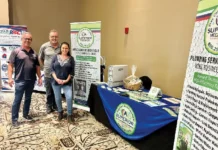
Not only can people find a new hobby and make friends through amateur radio, but they also have opportunities to serve the community and take part in community events. Club members have served as points of contact at 5K events and other races, escorted parades and helped supplement communications.
Members will also be at these upcoming events:
Saturday, Oct. 10, from 8 a.m. to noon
Trade show: Amateur Radio Club Hamfest at the Crestview Community Center, 1446 Commerce Drive, Crestview.
Saturday, Nov. 21, from 8 a.m. to 1 p.m.
Amateur radio electronics flea market: SwampFest at the roller derby hangar, Hangar 41, 41 Wyndham Ave. SE, Fort Walton Beach.
In addition to these events, there are opportunities to practice picking up radio signals using personal equipment well before emergencies occur. During the Fox Hunt, a mini transmitter is hidden in a defined area, and operators work their way toward it using their mobile radios.
Events range from local to nationwide. Field Day, held twice a year in June and January, brings together amateur radio operators throughout the nation to see how many other hams they can find using a variety of frequencies.
Visitors are welcome to attend club meetings, meet area experts and learn more about what ham radio operators can do.
PARC meets at 7:30 p.m. on the first and third Thursdays at 17 First St. in Fort Walton Beach. More information is available at w4zbb.org.
NOARC meets at 7 p.m. on the second and fourth Thursdays at 4565 Live Oak Church Road in Crestview. More information is available at w4aaz.org.
Questions can also be emailed to parcfwb@gmail.com. Additional clubs in the area include the Panama City Amateur Radio Club and the Milton Amateur Radio Club.
Michelle Ruschman is a local artist, speaker and writer. She can be reached at michelleruschman@gmail.com or michelleruschman.com.