
















By Lorraine Whetstone
The family dog found the litter of kittens underneath the kids’ playhouse. Jennifer Fuhrman had no idea they were there. She didn’t feed outside cats. She didn’t even have a cat. She loaded a box with the six black, mewing kittens into her car and called a shelter as she was backing out the driveway.
The shelter was full and couldn’t take them. Neither could another shelter, nor another. “I was like, What? Why? That’s what you DO.”
“I thought people were handling it,” she said. “I didn’t realize there were no good options.”
In Okaloosa County, there are an estimated 36,000 unowned, free-roaming community cats. Those cats give birth to 80 percent of the kittens that overwhelm local shelters – particularly right now during “kitten season.” * People find kittens everywhere – under porches, at shopping centers, in boats, in engines, running across roads. They contact shelters, desperate for help, but there is not remotely enough help, space or money available.
SOCKS TNR Army
Fuhrman is now working to provide the only good option. She commands the “TNR Army,” a targeted “trap, neuter, return” program established by Save Our Cats and Kittens Shelter (SOCKS) in Fort Walton Beach. Employees jokingly call her the “TNR Czar.” Colonies of community cats are trapped, spayed/neutered, then released back where they were trapped.
Targeted TNR is the only humane, scientifically proven method to reduce feline overpopulation. Colonies can’t be simply removed. More cats will arrive to fill the space. “Jennifer is typical of many people in our area who thought there was help for unwanted cats. She is unusual because she took the time to get involved in such a meaningful way,” said SOCKS Executive Director Nancy Schimmer. “Cat overpopulation is going largely unchecked, except for programs like ours and other rescues stepping up to help.
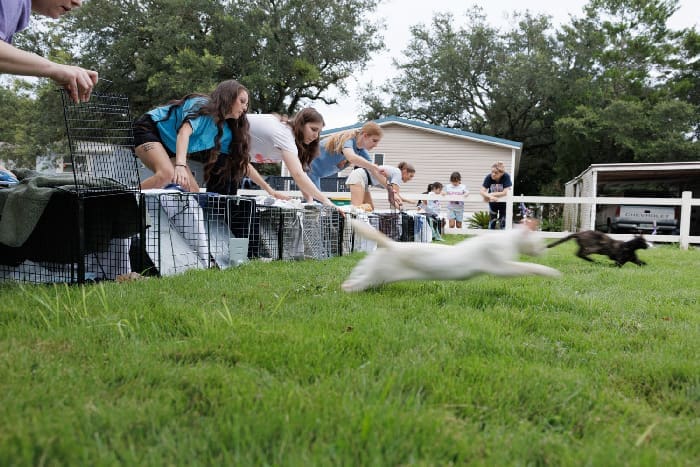


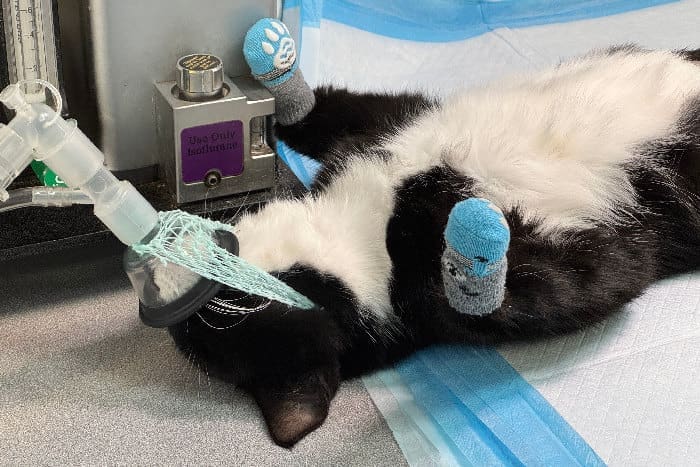


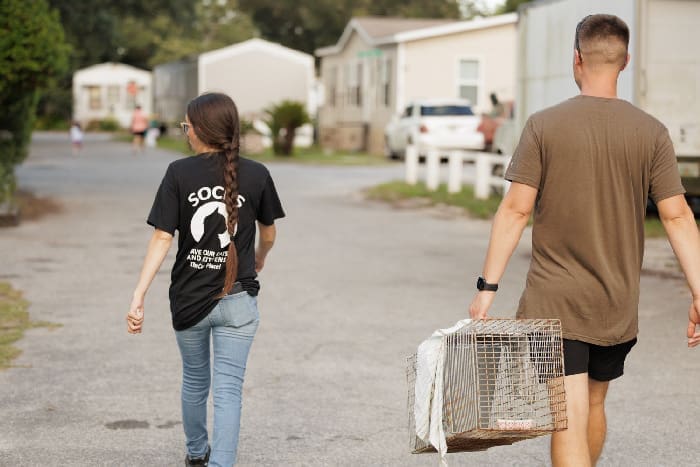
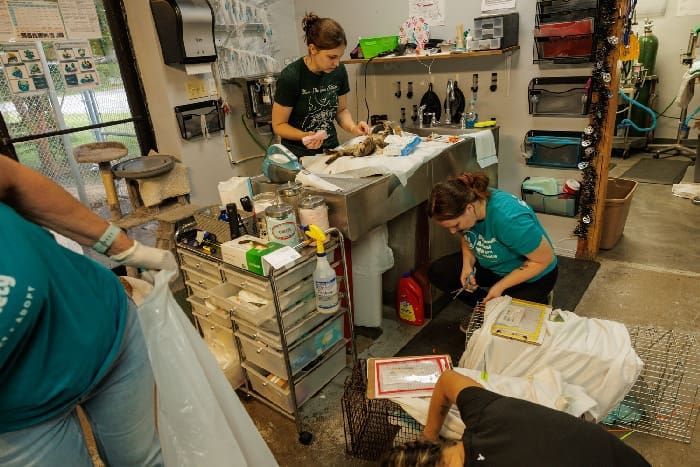


The largest TNR project so far sterilized 89 cats in July. It was a partnership between SOCKS and the Panhandle Animal Welfare Society (PAWS), funded by grants, including a $2,000 grant to SOCKS from PennyFix.
The second largest was 56 cats in a neighborhood off Racetrack Road in December. For that, SOCKS partnered with veterinarian Mack the SNipper and trappers from 30A Cats, Okaloosa Animal Protection League, PAWS and Animal Advocates of Northwest Florida. Donations covered $3,860 in veterinary costs.
Valerie Arciaga lives in the neighborhood and said cats were “howling and yowling and fighting all the time because they were mating.” One fight “was like the Tasmanian devil in the driveway.” Males sprayed in her garage. Cats got hit on the roads. You’d drive down a road and there were a dozen cats facing off. “It looked like a gang war,” she said.
After the TNR project, fighting and spraying stopped. Cats looked healthier. Without biting, there’s less risk of transmitting diseases. “It’s quiet. They’re much more chill,” she said. “There’s no kittens. We usually have hordes of kittens. “It’s fabulous.”
Mack the SNipper
Back when Fuhrman discovered kittens under her playhouse, there were no high-volume, low-cost spay/neuter veterinary clinics in Okaloosa County. The closest were in Panama City; Dothan, Ala.; and Ocean Springs, Miss. SOCKS and other rescues drove hours with vanloads of cats to get those cheaper surgery costs. For the public, getting just one cat “fixed” at a local veterinary hospital costs hundreds of dollars. Some vets offer discounts, but there are limited surgery slots available.
Grants help bring down the cost, but due to Okaloosa County ordinances, shelters can’t qualify for some large amounts of money. Schimmer hopes local officials will learn about the issue and what actually works so that cats will not continue to suffer and colonies can be alleviated.
One promising development is the recent arrival of Sara Mackinze, a.k.a. “Mack the SNipper,” in Okaloosa County, offering $85 packages for community cats that includes surgery, vaccines and an “ear tip,” the universal sign that a cat has been sterilized. Mackinze, who can perform 60 feline spay/neuter surgeries a day, has a mobile veterinary unit called the “Spayship,” and a brick-and-mortar clinic in downtown Crestview. “A couple members of our team are from Baker originally, and they were the ones that said we need to … bring this talent out here,” Mackinze said. “So that’s why we came, and that’s why we’ve stayed. We love it here, and we see the need is really great.”
TNR in Shalimar
Cats multiply quickly. Kittens can get pregnant at four months old and have up to four litters a year. Cats can get pregnant with a new litter while nursing another.
Brenda Armacost started TNR’ing in her Shalimar neighborhood to help out a friend who started out feeding a few cats. “And then it went from five or six cats to 20 cats,” Armacost said. Armacost is a veterinary technician at Crossroads Animal Clinic in Fort Walton Beach, so it’s convenient for her to trap cats and take them to work for surgeries. Since November 2024, she’s TNR’d 74 cats in the neighborhood. Ten kittens were tameable and found inside homes.
She takes a firm stance on reducing outdoor cat overpopulation. “If an unfixed cat is outdoors — even if someone owns it — I’m going to spay or neuter it,” she said. “That’s one more cat who won’t contribute to the cycle, and the owner gets the benefit of a free procedure.”
The cost – about $5,500 so far – is covered by the Okaloosa Animal Protection League, SOCKS, neighborhood donations and the occasional fundraiser, where Armacost trims dog nails in the community park. She posts pictures of the trapped cats on the community Facebook page so residents see where their money is going. “There are a lot of communities dealing with the exact same problem we are,” she said. “The need is so great that I’ve continued maintenance trapping just to keep the population under control.”
TNR Help
The SOCKS TNR Army trains people how to trap, and has traps available to borrow for a $75 deposit that’s returned when the trap is. The program makes it feasible for the community to manage its community cats. “We can help. We can support, but the ultimate success is gonna come from the community managing these cats on their own – in their own backyards, behind their own businesses.”
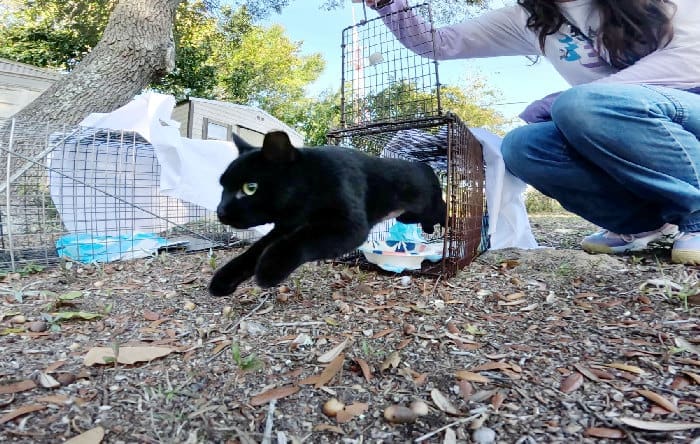
Some people find trapping exciting, kind of like “benevolent hunting.” But, for Fuhrman, the only fun part is when cats return home. “I love it when you release them and then they kind of run off and they turn around and look back at you like ‘What the heck just happened to me?’“
*Population estimate from a formula used by Florida Animal Friend, the organization behind Florida’s “spay/neuter” license plate. Percentage from Humane World for Animals (formerly the Humane Society of the United States and Humane Society International).
*For more information about the SOCKS TNR Army: https://saveourcatsandkittens.com/tnr/
*For more information about Mack the SNipper: mackthesnipper@gmail.com or (850) 417-8779
*It is illegal to shoot cats with BBs or worse. To prevent cats from congregating in yards or gardens, use motion-activated sprinklers, ultrasonic devices, or natural deterrent scents, such as citrus peels, coffee grounds, or safe essential oils.
*About birds: The mortality “estimates” sometimes attributed to community cats simply cannot be reconciled with the best population estimates available — or with the population trends documented by the annual North American Breeding Bird Survey.
In addition, such estimates leave no accounting for other well-documented causes of bird mortality, such as pesticide use, oil spills, habitat loss, window strikes, or other anthropogenic causes. Indeed, were these claims even remotely accurate, no birds would be left.
It’s well known to biologists that all predators — cats included — tend to prey on the young, the old, the weak, and the unhealthy. At least two studies have investigated this phenomenon in detail, revealing that birds killed by cats are, on average, significantly less healthy than birds killed through non-predatory events (e.g., collisions with windows or cars).
In any case, because the most effective way to reduce most populations of community cats is through sterilization, TNR offers a benefit to wildlife as well.
– Best Friends Animal Society